Before taiji filled the parks, the Yangs trained militia. This is their saber method.
Yang Taiji Dao: The Family Saber, Back the Way It Fought
The Yang Style Taiji Dao, taught in its earlier, more direct version: the one that preserves the practical applications from those fighting years. Six lines, thirteen lessons, nothing decorative, and the fastest entry into taiji weapons that still deserves the word martial.
Lifetime access. No local teacher required.
The saber form the Yang family actually used
Long before taiji became a park art, the Yang family's skills guarded things: households, caravans, communities. The saber was the working weapon of that world, and the family's dao method reflects it, compact, direct, and built from movements that earn their place.
This course teaches the earlier Yang saber form, preserved in a 1920s manual. It's short, just six lines, but every posture in it is functional, and the applications that gave the form its meaning come with it.
The form survived. The fighting didn't.
Plenty of schools teach a taiji dao form, so the gap isn't the sequence. It's what the sequence is taught as. The version that circulates today is the later, more linear form, usually handed on as choreography: the shape of the saber method with the martial content removed. The applications, the directness, the reasons the movements are what they are, those stayed with the earlier form.
So practitioners with years of taiji behind them can run a saber form beautifully and still never have been taught the saber. This course closes that gap.
WHAT'S INSIDE
The complete Chaoxian Shifa, posture by posture
The Form and Its Applications (13 lessons)
The complete early Yang saber form, worked through in small, absorbable bites: the postures, the footwork, the saber mechanics that distinguish dao work from the jian, and the practical applications preserved from the family's militia training, so every movement is learned with its purpose attached.
Course Completion Credential
Finish the full progression and earn the Academy's Yang Style Taiji Dao completion credential.
You also join the Academy community, where students around the world share training footage, find partners and ask questions.
WHO IT'S FOR
You know the later saber form.
You've learned the linear version that circulates today, and you can feel there's something underneath it that nobody showed you. The earlier form is that something: shorter, more direct, and carrying its applications with it.
You've trained taiji for years and never been taught the saber.
Your school stopped at the bare-hand form, or at best the jian, and the dao stayed a rumour. This is the missing weapon, in the family's own earlier version, and your taiji background means you'll absorb it fast.
You're new to taiji weapons entirely.
Six lines and thirteen lessons make this the gentlest serious entry into taiji weapons practice there is, and everything you build here, the grip, the saber mechanics, the intent, transfers to every weapon you pick up afterwards.You train alone.
The form is a complete solo study, the applications are there for when you have a partner, and the Academy community can help you find one.
Learn from a lineage, not a hobbyist
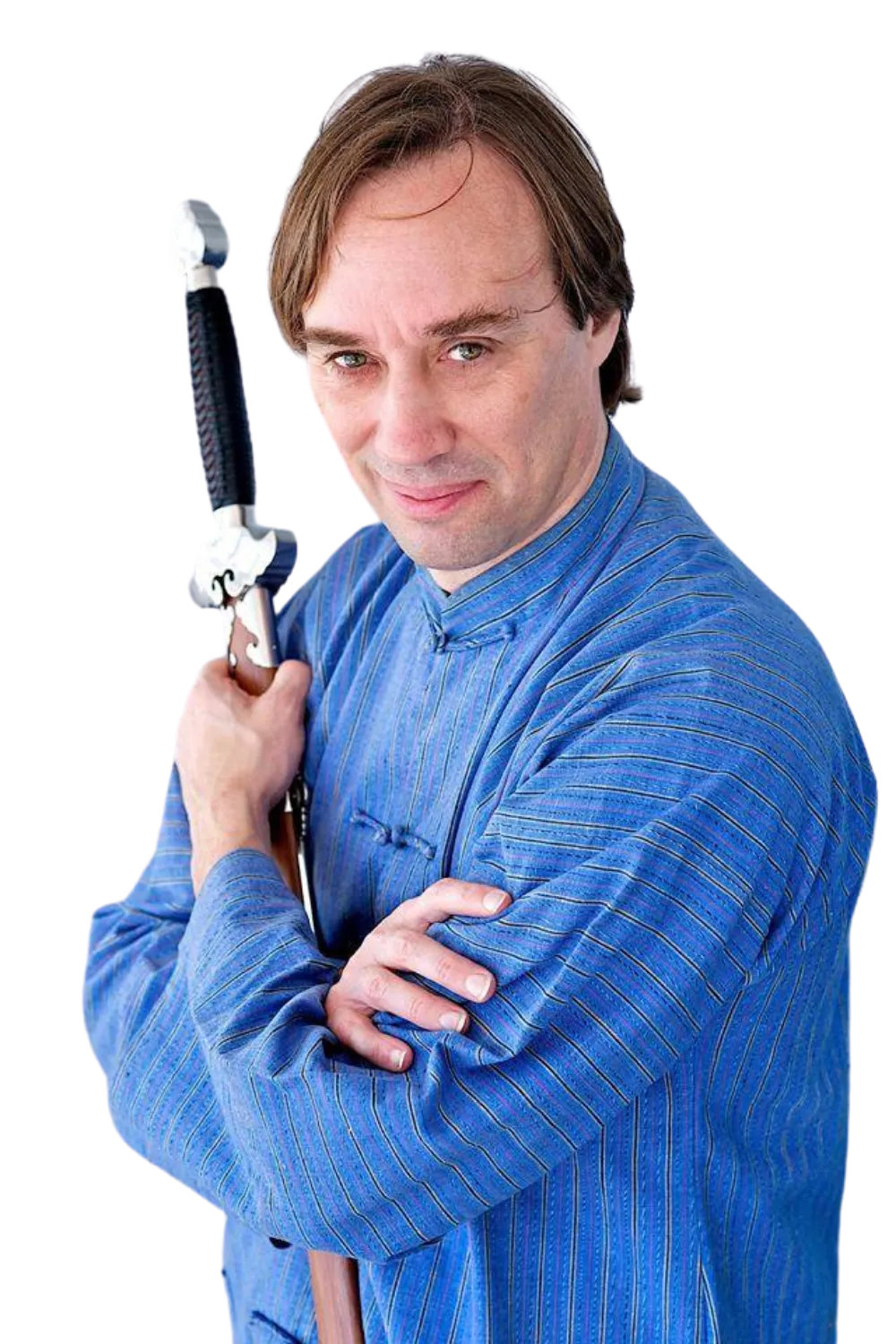
Your instructor is Scott M. Rodell, who has spent more than thirty years researching, teaching and pressure-testing Chinese swordsmanship: training students across six continents, authoring standard works in the field, and testing historical methods where they count, in full-contact free swordplay and against sharp-blade cutting.
When Scott Rodell teaches an application, it's not a theory about what a movement might mean. It has been tried against resisting opponents, refined, and taught to thousands of students.
Frequently Asked Questions
Do I need a taiji background?
No, though it helps. The course teaches the form from the beginning and stands on its own; if you already practise taiji, the body method will feel familiar and you'll move faster.
Is this the taiji dao form I already know?
robably not, and that's the point. This is the earlier, more direct Yang family version, shorter and more overtly martial than the later linear form most schools teach. If you know the later form, expect recognition and surprise in equal measure.
Do I need a training partner?
No. The form is a complete solo study. The applications are there for when you have a partner, and the Academy community can help you find one.
What exactly do I get?
Lifetime access to all thirteen lessons in your Academy portal, the completion credential, and membership of the Academy community. One payment, no subscription.
If I join a membership later, do I keep this course?
Yes. Standalone courses are yours for life, whatever you do afterwards.
What's the refund policy?
A 30-day money-back guarantee. If the course isn't for you, email us within 30 days for a full refund.
Six Lines. A Few Weeks. The Weapon Your Taiji Was Missing.
The Yang family's working saber, in its earlier, martial form, taught complete with the applications that give it meaning.


Link
CONTACT US
(703) 846-8222
Academy of Chinese Swordsmanship, 3543 Marvin Street
Annandale, VA 22003
Copyright 2026. The Academy of Chinese Swordsmanship. All Rights Reserved.