You've found the weapon. Now train the system.
The Miaodao Is a Weapon. Learn It Like One.
Han Jingtan built the Four Roads Miaodao at the Central Guoshu Academy to train soldiers, and it was still training them in the Second World War. This course teaches his complete system the way it was built to be taught: every cut for what it does, the form as fighting logic, then partner drills until you're ready to cross swords.
44 on-demand lessons. Lifetime access. No local teacher required.
The long blade that trained an army
In northern China, from the Qing dynasty onward, soldiers and militiamen trained many versions of the Sì Lù Miáodāo, the Four Roads Miaodao: long two-handed sabers, simple and practical, with nothing superfluous in them. The blade's advantage was obvious to anyone who faced it. Reach. Held in two hands it struck harder, deflected more strongly, and touched an opponent long before his weapon could answer.
In the early years of the Chinese Republic, Han Jingtan, who learned his miaodao from Guo Changshen at the Central Guoshu Academy in Nanjing, condensed an older, longer form into the Four Roads form taught in this course. It was created for one purpose, training soldiers, and it was still being taught to Chinese troops in the Second World War. That is why it retains its essential martial character, unlike the later performance versions built for acrobatics rather than combat.
Why the miaodao is so hard to learn
If you've tried to research this weapon, you already know the problem. The internet can't even agree on what a miaodao is. The name gets applied to half a dozen different long sabers, the histories contradict each other, the famous Qi Jiguang connection turns out not to survive scrutiny, and most of what's filmed under the name is performance wushu, built for judges, not opponents. For a weapon this admired, there is astonishingly little you can actually train from.
That's the gap this course closes. One documented system, from a named teacher in a named institution, taught complete: the real history separated from the myths, every cut for its function, and the form carried all the way to a partner's blade.
WHAT'S INSIDE
From form, to function, to fighting. In five modules.
Module 1 — Miaodao Essentials (6 lessons)
Everything you need before the first cut: the weapon's real history, whether to train with wood or metal, how to hold the miaodao, the ready stance, footwork, and the body mechanics that let a long blade move fast.
Module 2 — Basic Cuts (13 lessons)
The complete cutting vocabulary of the system, one cut per lesson: Bengtiao-Kan, Jiahu, Hengpi, Baohu, Jie, Kan, the deflections, Waifan and Neifan Zha, Lü, Ci, Ji and Tiao. Each cut drilled until it stops being a shape and becomes a strike with reach behind it.
Module 3 — The Form (14 lessons)
The complete Four Roads form, opened with a full demonstration and then built movement by movement, each lesson pairing the sequence with the fighting logic inside it, so by the final lesson you're not memorising choreography, you're rehearsing combat.
Module 4 — Partner Drills (9 lessons)
The cuts and deflections applied against another sword: nine partnered drills that teach the miaodao's real language, distance and timing, and leave you ready to step into free swordplay.
Course Completion Credential
Finish the full progression and earn the Academy's Four Roads Miaodao completion credential.
Also included: The Chinese Long Saber, an illustrated history of the miaodao and its cousins by Scott M. Rodell, and access to the Academy community, where students around the world share training footage, find partners and ask questions.
WHO IT'S FOR
You come from Japanese swordsmanship or HEMA longsword.
You already think in two-handed blades, and the miaodao has been pulling at you for a while. But everything you've found is guesswork or wushu, and you'd rather train a documented military system than an improvised one. The miaodao will feel familiar in your hands and completely different in its answers.
You're starting from zero.
You've been drawn to the Chinese long saber for years, but there's no teacher within a hundred miles and you're not going to piece it together from performance videos. The course starts with how to hold the weapon and hands you the entire path.You come from tai chi or kung fu.
You can perform sword forms, but nobody has ever walked you through what the movements do, and you've quietly wondered whether your practice would survive contact. Every form lesson here carries its fighting logic with it.You train alone.
Modules 1 to 3 stand entirely on solo work, the partner drills are there for when you have someone, and the Academy community can help you find them, so training alone stops meaning training in the dark.
Learn from a lineage, not a hobbyist
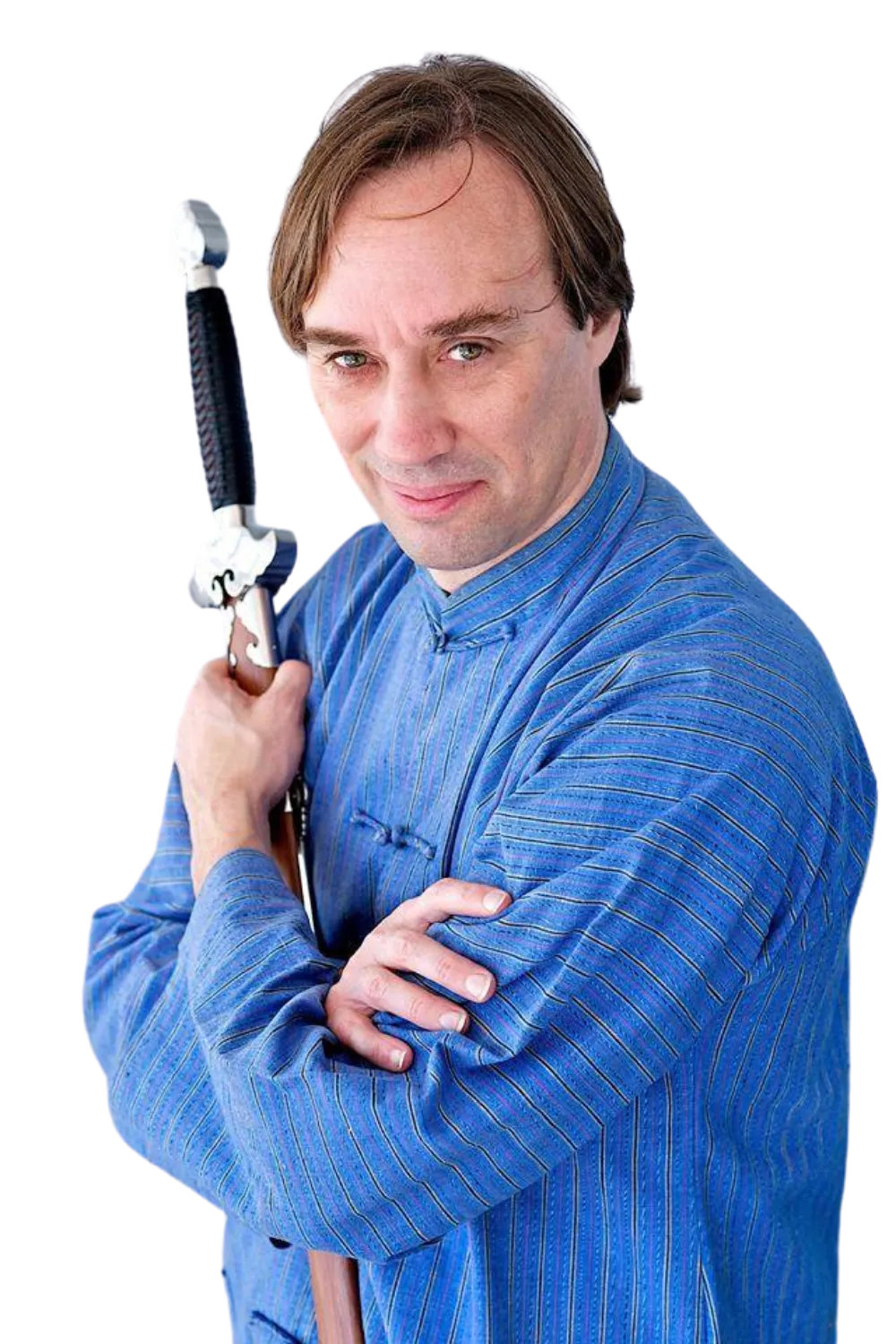
Your instructor is Scott M. Rodell, who has spent more than thirty years researching, teaching and pressure-testing Chinese swordsmanship: training students across six continents, authoring standard works in the field, and testing historical methods where they count, in full-contact free swordplay and against sharp-blade cutting.
When Scott Rodell teaches an application, it's not a theory about what a movement might mean. It has been tried against resisting opponents, refined, and taught to thousands of students.
Frequently Asked Questions
Is this beginner friendly?
Yes. The course begins with how to hold the miaodao and builds cut by cut from zero. If you have prior sword or HEMA experience you'll simply progress faster.
Do I need a partner?
No. The essentials, cuts and form, 33 of the 44 lessons, are solo work. The partner drills are there for when you have someone to train with, and the Academy community can help you find training partners near you.
What equipment do I need?
A training miaodao, wooden or metal, and the course opens with a full lesson on exactly that choice. For the partner drills you'll add a fencing mask, gloves and forearm protection, and a jacket. Recommended options are listed inside the course.
Can I use my longsword or katana trainer to start?
You can begin the cuts with a two-handed trainer you already own, but the miaodao's length and balance are the heart of the system, so plan to train with a proper miaodao as you progress. The wood-or-metal lesson will help you make a good choice.
What exactly do I get?
Lifetime access to all 44 lessons across four modules in your Academy portal, the illustrated history PDF, the completion credential, and membership of the Academy community. One payment, no subscription.
If I join a membership later, do I keep this course?
Yes. Standalone courses are yours for life, whatever you do afterwards.
What's the refund policy?
A 30-day money-back guarantee. If the course isn't for you, email us within 30 days for a full refund.
You Found the Weapon. This Is the System.
Han Jingtan's complete Four Roads method: the real history, every cut for its purpose, the form as combat, and partner drills that leave you ready to cross swords. Everything the performance versions leave out.


Link
CONTACT US
(703) 846-8222
Academy of Chinese Swordsmanship, 3543 Marvin Street
Annandale, VA 22003
Copyright 2026. The Academy of Chinese Swordsmanship. All Rights Reserved.