
Qing Dynasty Sabers: Six Types of Chinese Dao
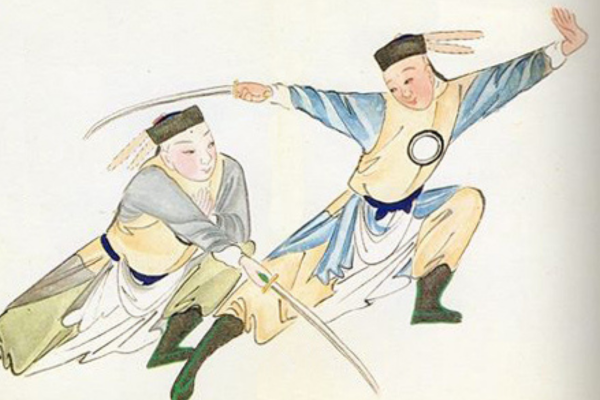
The Qing Dynasty (1644 to 1912) saw major changes in Chinese warfare, from the Manchu conquest and territorial expansion of the early period to the internal rebellions and conflicts of the 19th century. Throughout this period, the dao remained an important military weapon, although the sabers carried by regular soldiers, Bannermen and local militias varied in their construction and intended use.
In his recent two-part video series, Blades of the Bannerman: Sabers of the Qing Dynasty, Scott Rodell examines six types of dao, using original antique weapons to demonstrate their construction, handling characteristics and historical development.
An important distinction is between regulation military sabers, manufactured according to established patterns, and weapons produced outside the official military system. The willow leaf and goose quill were among the standard weapons of the Qing military, while the oxtail and dadao, despite their familiarity to modern martial artists, were not.
Liuyedao: The Willow Leaf Saber
The liuyedao was one of the principal military sabers of the Qing Dynasty, carried by both infantry and cavalry. Its name describes the blade's shape, with a gentle curve running along its length and the cutting edge and spine remaining roughly parallel until they meet at the point.
This curvature favours powerful cutting actions, but it also makes the weapon less suitable for direct thrusting. To bring the point into line with the hand, the wrist must be bent downwards, placing it in a weak position when striking a resistant target. Against armour or heavy protective clothing, attempting to thrust with any substantial force from this position could result in the weapon being deflected or even lost from the hand.
The willow leaf was a regulation weapon, although surviving examples show variations in length, weight and fittings. Earlier Qing sabers, especially those associated with the conquest period, commonly had iron fittings with more angular forms. Brass fittings and rounded designs became increasingly common later in the dynasty.
The dimensions of these weapons also appear to have changed over time. Some examples from the middle and later Qing periods are shorter and lighter than their earlier counterparts. One possible explanation lies in the changing nature of military service. Following the territorial expansion of the 18th century, Qing forces were increasingly involved in patrols, internal security and suppressing rebellions. Fighting in towns and cities placed different demands on a weapon than the more open engagements of earlier campaigns.
These changes were not uniform, and individual preference also influenced the dimensions of a saber. Nevertheless, the surviving weapons provide some indication of how military equipment developed over the course of the dynasty.
Yanmaodao: The Goose Quill Saber
The yanmaodao was another standard military saber, widely used alongside the willow leaf during the early Qing period and throughout the 18th century.
Although the two weapons can appear similar, their blade profiles have a significant effect on their use. Where the willow leaf curves along much of its length, the goose quill remains relatively straight until close to the point. This allows the tip to stay in line with the hand, making a direct thrust possible without placing the wrist under excessive strain.
The distinction becomes apparent when comparing the two weapons against a resistant target. With the willow leaf, the wrist must be lowered substantially to align the point for a thrust, whereas the goose quill can deliver that thrust with a much stronger alignment through the hand and forearm.
Many yanmaodao also have a bevelled section along the back of the blade near the point, sometimes extending seven or eight inches. This secondary edge was generally much duller than the main cutting edge, but it could still be used to strike.
The blade retains the weight required for powerful cuts while also allowing effective thrusting techniques. This combination is what makes the yanmaodao Rodell Laoshi's personal preference among the different types of dao.
Yutoudao: The Fish Head Saber
The yutoudao is an older blade form that predates the Ming Dynasty and continued to be used during the Qing, although surviving examples are relatively uncommon.
Its name comes from the distinctive raised section along the back of the blade near the tip, forming a profile resembling a fish's head. This raised section also forms a secondary edge, which could be used for striking, although it was generally less sharp than the main cutting edge.
In use, the yutoudao has much in common with the goose quill. The relatively straight blade allows direct thrusting while retaining the cutting capabilities of a military saber. The principal difference lies in the construction of the point.
Earlier examples often had a sharply raised section where the back of the blade changed direction quite abruptly. This created a potential weakness, as the sharp angles concentrated stress in a small area. When the blade struck a hard object, especially towards the point, there was a greater risk of breakage at this transition.
Later examples show a more gradual curve around the raised section, reducing these abrupt angles. However, the type appears to have become less common, perhaps because the yanmaodao provided similar cutting and thrusting capabilities without the same structural weakness.
Niuweidao: The Oxtail Saber
Of all the Chinese sabers, the niuweidao is probably the most familiar to practitioners of traditional Chinese martial arts. Yet it is a relatively late development and did not exist at the beginning of the Qing Dynasty.
Its origins are uncertain, but examples appear to have become increasingly common from around the mid-18th century. The weapon grew in popularity during the later Qing period, especially during the widespread rebellions and internal conflicts of the 19th century.
Unlike the willow leaf and goose quill, the oxtail was never a regulation military pattern. These weapons were produced locally, which accounts for the variation in blade length, curvature and proportions found among surviving examples.
The defining characteristic is the blade widening toward the tip, concentrating much of its weight around the principal cutting area. This gives the weapon a distinctly different feeling from the more evenly balanced military sabers.
Its action is almost axe-like. A particular area of the blade naturally wants to strike, and the weight concentrated toward the tip produces a powerful chopping cut. The curvature and shape of the point make conventional straight thrusting much less practical.
The amount of widening also appears to have increased over time. Earlier examples generally show a less pronounced difference between the width near the hilt and the blade's broadest part, while later examples can be much wider toward the tip. This can provide a rough indication of age, although the variation in locally manufactured weapons makes precise dating difficult.
The popularity of the oxtail may have been connected with the increasing use of irregular troops and local militias during the later Qing period. A heavy blade capable of delivering a powerful blow without requiring precise targeting would have been useful to men with limited formal sword training.
Piandao: The Slicing Saber
The piandao is one of the more unusual sabers covered in the series, with a deeply curved blade quite different from the willow leaf, goose quill or oxtail.
While most dao are named after their shape, the piandao takes its name from its function. Pian refers to slicing, and the blade suits long, drawing cuts rather than the concentrated chopping actions associated with the oxtail.
The piandao was a regulation military weapon, issued to soldiers equipped with rattan shields. These included the troops commonly known as Tiger Men, who served as frontline skirmishers and were employed against enemy formations and cavalry.
The Tiger Men carried distinctive shields, sometimes decorated with large faces, and wore clothing intended to resemble tigers. Accounts also describe their use of noise and explosive devices to frighten enemy horses, although how effective these methods were in practice is difficult to establish.
The blade is too deeply curved for a conventional straight thrust, but its length and curvature offer other possibilities when used alongside a shield.
Compared with the oxtail, the difference in cutting action is quite pronounced. The oxtail concentrates its force into a relatively small area and has a strong chopping action. The piandao instead favours a longer slicing movement, with less of the axe-like feeling associated with the wider blade.
One possibility is that this made it useful against moving opponents, especially cavalry. A deeply curved blade delivering a passing cut might be less likely to become trapped in the target or pulled from the hand, an important consideration for troops engaging horsemen at close quarters.
Its shape may also have allowed shield-bearing soldiers to strike around or over their shields, although these practical applications remain interpretations based on the weapon's handling and the known role of the men who carried it.
There may also have been some influence from the deeply curved sabers of Persia and Central Asia, including the shamshir. China had contact with these regions, but the exact origins of the piandao remain uncertain.
Despite appearing in Qing military regulations, surviving examples seem rare. Among the thousands of antique Chinese weapons examined by Rodell Laoshi, only a handful have been piandao, compared with the many hundreds of willow leaf and goose quill sabers he has encountered.
Whether this reflects limited production, restricted military use or simply the survival of fewer examples is unknown.
Dadao: The Great Saber
The dadao is usually associated with Chinese troops during the Second World War, especially the famous 29th Army. However, weapons of this type were already widely used during the Qing Dynasty, particularly from the middle of the dynasty onwards.
They were common among irregular forces and local militias during the rebellions and internal conflicts of the 19th century. Like the oxtail, the dadao was not a regulation military weapon, and surviving examples vary in blade shape, length and handle construction.
Some examples were balanced primarily for single-handed use but had handles long enough to allow a second hand when required. Others placed greater emphasis on two-handed cutting.
The weapon's principal characteristic was its ability to deliver powerful chopping blows. This may have made it suitable for troops with limited formal sword training.
Many men recruited into local militias would have been accustomed to working with agricultural tools such as axes, hoes and shovels. Using both hands to deliver a heavy chopping action would therefore have been familiar, even if formal military swordsmanship techniques were not.
The dadao was not restricted to irregular forces. Period photographs also show Qing Bannermen carrying these weapons while on patrol, and they were used in maintaining order and administering punishment, including executions.
Their continued use into the 20th century, especially during the Second World War, demonstrates how long this general type of weapon remained in service.
Chinese Sabers and the Changing Nature of Warfare
These six types of dao were not successive replacements for one another. Several remained in use alongside each other, serving different military roles over the course of the Qing Dynasty.
The distinction between regulation and non-pattern weapons is important. Regulation sabers were manufactured to established specifications, while locally produced weapons could vary according to their intended use, the maker and the preferences of those carrying them.
The study of surviving weapons, their construction and their handling provides valuable historical context for the Chinese swordsmanship methods practised today.
Watch: Blades of the Bannerman
The two videos examine original antique examples of all six sabers, allowing the differences in construction, balance and handling to be seen rather than simply described.
Part 1: Oxtail, Willow Leaf and Goose Quill
Part 2: Fish Head, Slicing Saber and Dadao
Sources and Further Reading
Primary source
Scott M. Rodell, Blades of the Bannerman: Sabers of the Qing Dynasty, Parts 1 and 2.
Further reading
Philip M. W. Tom (2001), Some Notable Sabers of the Qing Dynasty at the Metropolitan Museum of Art. Metropolitan Museum Journal, Volume 36.
Smithsonian National Museum of Asian Art, Qing Dynasty.
Historical regulation source
Huangchao Liqi Tushi, an 18th-century illustrated compendium of Qing imperial regulations, including military equipment.


